La campagne au jour le jour

EPP and S&D running neck and neck in the European electionsPPE et S&D ex aequo aux élections européennes

On 2nd April 2014 Poll Watch 2014, a project developed by VoteWatch Europe in partnership with Burson-Marsteller and Europe Decides, published a new poll on the possible results of the upcoming European elections. Ae previous trend is now declining. Indeed the Socialists, who were ahead in the last three forecasts, are now due to win 212 seats in the European Parliament – on a par with the European People’s Party which “is now gaining ground again.”

MoreLe 2 avril 2014, Poll Watch 2014, projet développé par VoteWatch Europe en partenariat avec Burson-Marsteller et Europe Decides, a publié un nouveau sondage concernant les résultats potentiels lors des prochaines élections européennes. Aussi, la tendance précédemment mise en évidence tend à disparaître. En effet, les Socialistes, en tête selon les trois dernières prédictions, obtiendraient aujourd’hui 212 sièges au Parlement européen, à égalité, donc, avec le Parti populaire européen qui connaît un retour en force».

Lire la suite

The EPP ahead in the May elections 2014Le PPE en tête pour les élections de mai 2014

The site “Cicero – EU election tracker” published a poll on 2nd April 2014 focusing on voting intentions on the part of European citizens in the upcoming European elections in May 2014. According to this poll the European People’s Party is due to win the European elections with 27% of the vote against 25.7% for the European Socialist Party. The third political force in the European Parliament, according to this poll would be the non-attached MEPs who are due to win 12% of the vote ahead of the liberals in the Alliances of Liberals and Democrats of Europe (11.5%), and the Greens (7.5%). According to Cicero the EPP will lose 71 seats during this election whilst the non-attached will win 59.

MoreLe site « Cicero – EU election tracker » a publié un sondage le 2 avril 2014 portant sur les intentions de vote des citoyens européens lors des élections européennes de mai 2014. D’après ce sondage, le Parti populaire européen arriverait en tête aux élections européennes, avec 27% des voix, contre 25,7% pour le Parti socialiste européen. La troisième force politique du Parlement européen, d’après ce sondage, serait les députés non-inscrits, qui obtiendraient 12% des voix, devant les libéraux de l’Alliance des libéraux et démocrates européens (11,5%) et les Verts (7,5%) D’après Cicero, le PPE perdrait 71 sièges lors de ces élections tandis que les Non Inscrits en gagneraient 59.

Lire la suite

The “first presidential debate” for the European Commission will take place on 28th AprilLe « premier débat présidentiel » pour la Commission européenne aura lieu le 28 avril

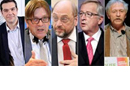
The very first TV debate between candidates running for the presidency of the European Commission for the legislature 2014-2019 will take place at the University of Maastricht on 28th April 2014 from 7pm to 8:30pm (local time). Appearing in the programme will be Jean-Claude Juncker (EPP), Martin Schulz (S&D), Guy Verhofstadt (ALDE), José Bové with Ska Keller (EGP) and Alexis Tsipras (GUE). It will take place with 700 young people in attendance and broadcast via Euronews. The audience will be able to ask the candidates questions via a questionnaire sent by their university if it takes part in the procedure or if this is not the case via the Young Voters’ League.

Communiqué de presseHappy votingLe tout premier débat télévisé entre les candidats à la présidence de la Commission européenne pour la législature 2014-2019 sera organisé au sein de l’Université de Maastricht le 28 avril 2014 de 19h à 20h30 (heure locale). Il réunira Jean-Claude Juncker (PPE), Martin Schulz (S&D), Guy Verhofstadt (ADLE), José Bové avec Ska Keller (PVE) et Alexis Tsipras (GUE). Il se déroulera en présence de 700 jeunes et sera retransmis en 13 langues par le biais d’Euronews. Les jeunes ont la possibilité de poser des questions aux candidats via un questionnaire envoyé par leur université si elle participe à la procédure, ou si ce n’est pas le cas via la Ligue des Jeunes Électeurs.

Communiqué de presseHappy voting

Martin Schulz the Party European Socialists’ candidate in the European elections Martin Schulz candidat du Parti socialiste européen aux élections européennes

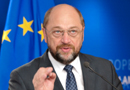
On March 1st 2014 the Party of European Socialist (PES) which met in congress in Rome appointed Martin Schulz as its lead candidate in the European elections. Martin Schulz is a German MEP, and an SPD member – he has also been the President of the European Parliament since 17th January 2012. He will therefore be leading the campaign for the PES in the European Elections on 25th May 2014.

MoreLe 1er mars 2014, le Parti socialiste européen (PSE), réuni en congrès à Rome, a désigné Martin Schulz comme son candidat tête de liste pour les élections européennes. Martin Schulz est un eurodéputé allemand, issu du SPD, et président du Parlement européen depuis le 17 janvier 2012. Il mènera donc la campagne du PSE pour les élections européennes du 25 mai 2014.

Lire la suite

Jean-Claude Juncker European People’s Party candidate in the European ElectionsJean-Claude Juncker candidat du Parti populaire européen aux élections européennes

The European People’s Party (EPP), which met in congress on 6th and 7th March 2014 in view of the European elections, elected Jean-Claude Juncker as its lead candidate. He will be leading the campaign for the European elections in May 2014. Mr Juncker was previously Prime Minister of Luxembourg (18 years) from December 1995 to December 2013 and president of the Eurogroup from 2005-2013.

MoreLe Parti populaire européen (PPE) s’est réuni en congrès les 6 et 7 mars 2014 dans la perspective des élections européennes. A cette occasion, le parti a élu Jean-Claude Juncker comme le candidat tête de liste qui mènera la campagne pour les élections européennes de mai 2014. Jean-Claude Juncker a été le Premier ministre du Luxembourg pendant 18 ans de décembre 1995 à décembre 2013, et président de l’Eurogroupe de 2005 à 2013.

Lire la suite

Alexis Tsipras, the European Left’s candidate in the European electionsAlexis Tsipras, candidat du Parti de la Gauche européenne pour les élections européennes

The European Left (EL) which met in congress on 13th-15th December 2013 appointed Alexis Tsipras as its lead candidate in view of the European elections in May 2014. He will therefore be leading their EL’s campaign until the elections in May 2014. Alexis Tsipras is a Greek far left politician, chairman of the Greek party Syriza and Deputy-Chair of the EL.

MoreRéuni en Congrès du 13 au 15 décembre 2013, le Parti de la Gauche européenne (PGE) a désigné, dans la perspective des élections européennes de mai 2014, Alexis Tsipras comme son candidat tête de liste. Il mènera donc la campagne du PGE jusqu’aux élections européennes de mai 2014. Alexis Tsipras est un homme politique grec d’extrême gauche, président du parti grec Syriza et vice-président du PGE.

Lire la suite

Guy Verhofstadt will be the lead candidate for the European LiberalsGuy Verhofstadt sera le candidat tête de liste des Libéraux européens

During the meeting of the Alliance of Liberals and Democrats for Europe on February 1st Guy Verhofstadt was appointed as the party’s lead candidate in view of the European and the European Commission elections He will co-lead the campaign with present European Commissioner Olli Rehn. Moreover the party of European Democrats which met on 12th March in Strasbourg also decided to support Olli Rehn in his bid for the Presidency of the European Commission and appointed him as their lead candidate.

MoreA l’occasion d’une réunion de l’Alliance des démocrates et libéraux européens le 1er février, Guy Verhofstadt a été désigné comme leur candidat tête de liste pour les élections européennes et la Commission européenne. Il sera le co-leader de la campagne avec l’actuel commissaire européen Olli Rehn. Par ailleurs, le Parti des démocrates européens, réuni le 12 mars à Strasbourg, a également décidé de soutenir la candidature d’Olli Rehn pour la Commission européenne et de le désigner comme sa tête de liste.

Lire la suite

Ska Keller and José Bové will lead the European Green Party’s campaign for the European electionsSka Keller et José Bové mèneront la campagne du Parti Vert européen pour les élections européennes

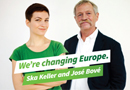
On 10th November 2013 to 28th January 2014 the European Green Party organised a primary on line to enable supporters across Europe vote for the candidate who will lead the European campaign and be their candidate in the May 2014 election. After this primary Ska Keller, a German Green MEP and José Bové a French Green MEP, were elected as the European Green Party’s candidates in the European elections.

MoreDu 10 novembre 2013 au 28 janvier 2014, le Parti vert européen a organisé une primaire en ligne pour permettre à ses sympathisants européens de voter pour le candidat qui mènera la campagne européenne et sera candidat aux élections européennes de mai 2014. A l’issue de cette primaire, Ska Keller, une eurodéputé verte allemande, et José Bové, l’eurodéputé vert français, ont été élus comme les candidats du parti vert européen pour les élections européennes.

Lire la suite

Slovakia: according to the most recent polls, low turnout will prevail in the European ElectionsSlovaquie : d’après les derniers sondages, faible participation aux élections européennes

According to a poll by MVK turnout in Slovakia in the European elections in May 2014 will be about 20.2%, whilst 39.6% of the population are “probably” going to ballot on 24th May 2014. According to MVK the results will be as follows: Direction Social Democracy (SMER – sociálna demokracia-PES) is due to win 38.8% of the vote, followed by the Christian Democratic Movement (KDH Kresťanskodemokratické hnutie-EPP) with 12%, then “Ordinary People and Independents” (Obyčajní Ľudia a nezávislé osobnosti OĽaNO ) 8.5%. NOVA (Nova, Konzervatívni demokrati Slovenska, Občianska konzervatívna strana) is due to win 7.5 %, the Slovak Democratic and Christian Union-Democratic Party (Slovenská demokratická a kresťanská únia – Demokratická strana) 6.4% and the Hungarian Coalition Party (Strana maďarskej koalície SMK-MKP) 5.2%, respectively. The Freedom and Solidarity Party (Sloboda a Solidarita (SaS) has the support of 5.1% of those interviewed. Most-Hid (Bridge-EPP) and the National Slovakian Party (Slovenská národná strana) are due to win 4.7% of the vote. During the two previous elections for the European Parliament Slovakia had the lowest turnout rate: 19.64% in 2009 and 16.96% in 2004.

MoreSelon un sondage publié par l’agence MVK, le taux de participation en Slovaquie aux élections européennes de mai 2014 représenterait 20,2%, alors que 39,6% des citoyens envisagent « probablement » de se présenter aux urnes le 24 mai 2014. Toujours selon l’agence MVK, les résultats des votes seront les suivants : le Parti Direction Démocratie sociale (SMER – sociálna demokracia-PSE) obtiendrait 38,8% des suffrages, suivi par le Mouvement chrétien-démocrate (KDH Kresťanskodemokratické hnutie-PPE) avec 12% de voix, suivi par « Les gens ordinaires et personnalités indépendantes » (Obyčajní Ľudia a nezávislé osobnosti OĽaNO ) avec 8,5% des voix. Le parti NOVA (Nova, Konzervatívni demokrati Slovenska, Občianska konzervatívna strana) avec 7,5 %, le Parti (Slovenská demokratická a kresťanská únia – Demokratická strana) avec 6,4% de voix et le Parti de la coalition hongroise (Strana maďarskej koalície SMK-MKP) avec 5,2%, respectivement. Le Parti Liberté et Solidarité (Sloboda a Solidarita (SaS) a été soutenu par 5,1% des personnes interrogées. Most-Hid (Pont-PPE) et le Parti national slovaque (Slovenská národná strana) obtiendraient 4,7% des suffrages. Lors des deux précédentes élections au Parlement européen, la Slovaquie a eu le taux le plus bas de participation : 19,64% en 2009 et 16,96% en 2004.

Lire la suite

German Party Programmes (CDU/SPD/Grüne/FDP/Linke)Programmes des partis allemands (CDU/SPD/Grüne/FDP/Linke)

The Konrad Adenauer Foundation has published a summary of the programmes of the German parties (CDU/SPD/Grüne/FDP/Linke) in the European elections which will take place in Germany on 25th May 2014. The study summarises the positions taken by the parties in various sectors including “European integration” “the European institutions” “the euro”, the “future of the European Union”, “changing the treaties”, “institutional reform” etc.

MoreLa Fondation Konrad Adenauer publie un résumé des programmes des partis allemands (CDU/SPD/Grüne/FDP/Linke) pour les élections européennes qui auront lieu en Allemagne le 25 mai 2014. L’étude résume les positions des partis dans les matières diverses dont « l’intégration européenne », « les institutions européennes », « l’Euro », « l’avenir de l’Union européenne », « changement des traités », « réformes institutionnelles », etc.

Lire la suite